
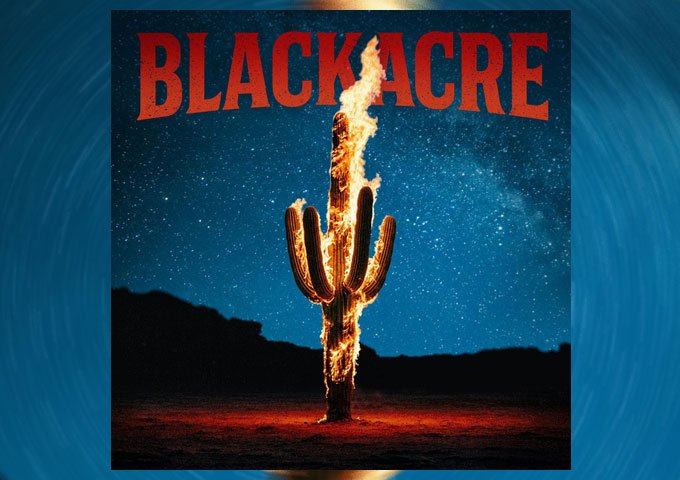
Blending western noir storytelling, progressive musicianship, and arena-sized hooks, Blackacre refuses to play by conventional rules. The result is a bold and immersive record that rewards listeners from the first note to the last.
Out of the sun-scorched grit of the Arizona desert, a formidable new sonic architecture has been forged. Blackacre has arrived, not to politely request entry into the modern alternative hard rock lexicon, but to redefine its boundaries entirely. With their self-titled 10-track album, Blackacre, the band delivers a stunningly cohesive, intellectually stimulating masterclass that weaves a dark, cinematic tapestry of existential dread, generational trauma, and gritty narrative folklore. Balancing technical precision with immense emotional weight and a pervasive desert rock aesthetic, the record unfolds with deliberate intention.
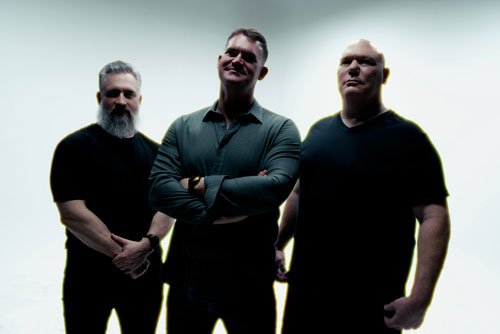
Drawing favorable comparisons to stalwarts like Breaking Benjamin, Chevelle, and Seether, Blackacre – made up of Henry Edward Whitmer on guitar and vocals, Kevin Patrick Crough on drums, and Michael Königherz on bass – nevertheless carves out a lane wholly their own, driven by a technical, drum-forward foundation, shifting textures, and a profound hands-on approach to writing and production that prioritizes explosive release over trend-chasing. The brilliance of the album lies heavily in its structural philosophy. The tracklist unfolds almost in thematic pairs, each set of songs exploring a different facet of the band’s expansive vocabulary while remaining tethered to the same dust-blown, atmospheric universe.
The descent begins with ‘Praying to a God I Don’t Believe In’, a track that opens the album with a sense of desperate vertigo, perfectly capturing a claustrophobic existential crisis. Musically, the drums lean much further into metal territory, utilizing intricate cymbal patterns, precise double bass work, and recurring tribal-inspired rhythms that give the song a unique, primal pulse. The guitar leads are restrained but emotionally deliberate, guiding the listener through a rapid psychological downward spiral. The striking lyrical imagery of winding clocks and weather vanes underscores a helpless obsession with passing time and shifting fates. Caught between physical exhaustion and spiritual bankruptcy, the narrator turns to a rejected higher power for absolution when stripped of all control. During the final chorus and outro sections, the arrangement gradually opens into something much larger and more immersive, a grand sonic awakening born from spiritual panic.
This panic shifts from individual existentialism to the harrowing weight of historical trauma in ‘Bombs Away!’, one of the most accessible and radio-friendly tracks on the record. Built around an anthemic chorus and a sweeping scale, the song delivers a crushing look at war, dementia, and aging, contrasting vibrant memories of a youth spent fighting across France with the cold, isolated reality of a modern nursing home. Blackacre masterfully explores how old photos become unrecognizable and fallen brothers fade like lavender. What elevates ‘Bombs Away!’ beyond straightforward hard rock is a breathtaking symphonic interlude, a moment of orchestral texture that gives the song room to breathe before surging back into a towering hook tailor-made for live crowds. This massive track is poised for a visual counterpart, as Blackacre is currently filming the official music video for ‘Bombs Away!’
The accessible, grand-scale ambition continues into ‘Loud as Thunder’, serving as the album’s mid-tempo, blue-collar anchor. Tackling the soul-crushing monotony of an unfulfilled life, the protagonist finds themselves trapped on a dead-end street, watching the days blur together in a loop of personal blunders and bitter regrets. Like its predecessor, ‘Loud as Thunder’ balances emotional delivery with a dramatic, film-score inspired symphonic interlude between strumming acoustic guitars and melodic vocals. Amidst domestic stagnation, the character Mary represents a desperate yearning for escape before time completely runs out. The thunderous roar of the chorus juxtaposes sharply against the quiet, persistent rain of reality, emphasizing a tragic realization that life is fading away drop by drop, all while showcasing a brilliant melody that never sacrifices the band’s signature heavy intensity.
The record then pivots into ‘Quinceañera’, acting as a vital bridge between the album’s western influences and its heavier material. Despite its festive title, Quinceañera is a raw, agonizing journey through psychological fracturing and the painful pursuit of healing. The verses surprise the listener, pulsing with groove and movement that almost makes the song feel like a dance track. However, this rhythmically enticing setup erupts violently into a chorus and breakdown rooted firmly in metalcore. This breakdown is exceptionally complex, marking the only moment on the album where the vocalist fully unveils the harshest vocal performance on the record, fiercely rejecting toxic platitudes about time healing all wounds. When the breakdown returns during the outro, the drums perform metric modulation patterns that border on progressive metal, evoking the kind of rhythmic experimentation associated with bands like Periphery, transforming a song about severe emotional trauma into a fierce anthem of resilience.
Listeners are then introduced to the first half of a brilliant Western duology with Holy Fire: Embers. The two Holy Fire tracks tell a continuous story, channeling a darker and heavier interpretation of the outlaw-western spirit associated with artists like Colter Wall. Holy Fire: Embers hits immediately with tenacious blues-rock guitar and bass work driven forward by powerful drumming, making it one of the album’s most aggressive, groove-oriented offerings. Lyrically, it drops listeners directly into a fatal, moonlit duel driven by toxic lust over a woman named Mary Lou. It stands as a brilliant deconstruction of outlaw machismo; as the narrator bleeds out on the dirt, realizing he has been manipulated, Mary Lou delivers a cold rejection and walks away with a rival, leaving nothing behind but physical and metaphorical ashes.
The swaggering, heavy groove of the West continues into Buckle Bunny, forming a natural thematic pair with the preceding track. This song functions as a character study in fragile masculinity and textbook delusion, featuring banjo-inspired guitar leads, a driving bass performance, and a guitar solo that allows the composition to breathe before launching into a drum-forward bridge and outro. The drumming throughout the track shows masterclass control, injecting bursts of energy precisely where appropriate. Adopting the persona of an arrogant, self-proclaimed living legend who claims he will eclipse the moon, the lyrics expose how empty, aggressive pride is used as a shield to mask a profound fear of intimacy. Rather than face accountability, the protagonist chooses to flee into the pounding rain, running blindly from his past.
The album plunges into its darkest, heaviest emotional valley with Threnody, representing the apex of the band’s metal-leaning sensibilities without losing their melodic core. Threnody opens with a verse inspired by bands like Silverstein, featuring natural harmonics and atmospheric guitar textures before exploding into an enormous, face-melting chorus. The bridge introduces an aggressive, lightning-fast tapping section reminiscent of Amon Amarth, eventually leading into a punishing breakdown that stretches past the one-minute mark without losing an ounce of momentum. This sonic onslaught perfectly mirrors the lyrical theme, which utilizes the Greek myth of Sisyphus to examine chronic depression. Frame by frame, the daily routine is cast as a literal boulder being endlessly pushed up a hill, blending haunting liturgical chants with themes of mortality to craft a powerful monument to the exhausting, invisible battles fought against mental illness.
The technical and heavy direction reaches its zenith with Golden Age, a progressive rock centerpiece that analyzes the painful gap between expectations and reality. The track leans heavily into progressive territory, at times feeling like a modern tribute to Rush and songs such as Tom Sawyer. The drumming throughout Golden Age is incredibly intricate without becoming self-indulgent, constantly pushing the momentum forward while maintaining strong melodic awareness. In sharp contrast, the interlude shifts into something far more spacious and restrained, channeling the atmospheric guitar phrasing and tonal clarity associated with Dire Straits. This juxtaposition highlights the lyrical breakdown of communication, where past failures are carried like coins in a jar, warning that the most precious moments of human connection are inherently fleeting and bound to fade away.
The blood-soaked sequel, Holy Fire: Inferno, flips the narrative perspective back to the dust, completing the story started earlier on the record. Trading the brute force of its sibling track for a haunting, ethereal atmosphere, the song unfolds as something deeply menacing and ritualistic. Utilizing cigar box guitar textures, and trenchant spoken-word storytelling vocal passages, the narrative shifts to a gritty tale of frontier vengeance guided by Santa Muerte, as the protagonist tracks down Mary Lou and her accomplice to avenge the backstabbing murder of his brother from the earlier track. Stripping away any remaining romantic myth of the Old West, the lyrics culminate in a brutal act of retribution. Leaving a crippled Mary Lou with a single bullet, the track closes with a chilling, formal Catholic prayer, beautifully illustrating how horrific violence is often justified through the lens of sacred duty.
Finally, the album reaches its cosmic closer with Stargazer, a track that masterfully mirrors an interpersonal war through the grand, chaotic language of astrophysics. Continuing the heavier direction with another towering chorus, the drumming is engaging, forceful, and highly musical, helping the song’s many timing and meter changes feel entirely natural. Atmospheric guitar layers, piano, and open chord voicings during the pre-chorus create a weightless atmosphere. One of the most unique moments on the entire album occurs during the bridge section from 3:13 to 3:57, where the guitar riff itself never changes, yet the evolving drum patterns and rhythmic phrasing create the illusion of an entirely shifting melody underneath it. As the lyrics frame the crumbling of a toxic relationship through retrogrades and constellations burning out, the outro delivers the album’s most technically demanding guitar performance. The music descends into a frantic, repeating spiral, ending the album on a dizzying note of cyclical entrapment, demonstrating how the gravity of a faded memory can pull someone permanently down into the dark.
While the album’s musicianship and arrangements are consistently impressive, the vocal performance deserves equal recognition. The vocals balance grit and melody with remarkable control, guiding the listener through the album’s most emotionally charged moments without ever sacrificing the power of the material. The articulate and expressive vocal deliveries across all tracks shift seamlessly between introspective restraint, soaring melody, and hard-rock intensity, providing the emotional thread that connects the album’s themes of loss, regret, memory, faith, and redemption.
With this self-titled triumph, Blackacre has achieved something remarkably rare in modern rock. They have crafted an album that demands to be listened to as a complete, singular piece of art. Through exceptional musicianship, uncompromising lyrical depth, and a brilliant command of sonic storytelling, Blackacre has planted a flag firmly in the desert sand, marking the definitive arrival of a new heavy rock vanguard.
OFFICIAL LINKS:
Spotify: www.open.spotify.com/artist/0INuaov3WzDRFeCA8RBWRR?si=mNbZZD8gSbOKLIKLdtKh_g
YouTube: www.youtube.com/@blackacreband
Instagram: www.instagram.com/blackacre.band
TikTok: www.tiktok.com/@blackacre.band
Facebook: www.facebook.com/blackacre.band



















+ There are no comments
Add yours