
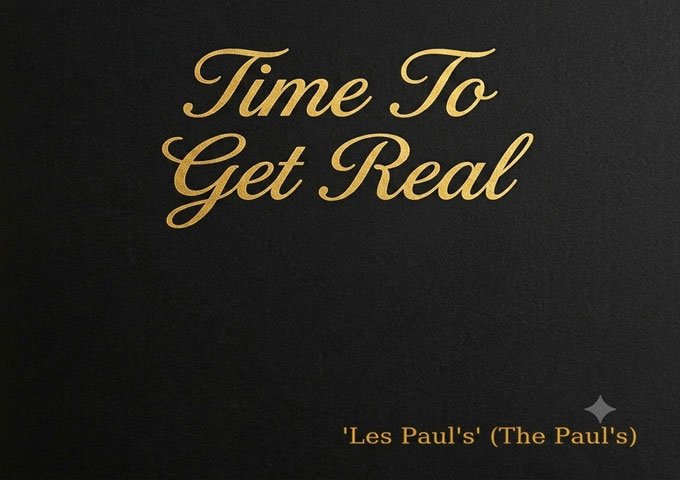
From the Harlem Hellfighters to Hiroshima, the album treats the past as unfinished business. Personal heartbreak sits alongside global tragedy without ever feeling forced. Thirty-one albums in, the duo still writes like they have something urgent to prove.
Two men who share a first name and a lifetime of friendship have built something rare in modern music: a songwriting partnership that has produced thirty-one full albums without ever leaning on shortcuts. Les Paul’s (The Paul’s), the duo of composer Paul Odiase and lyricist Paul Robert Thomas, formed in 2014 in North London, bonding over a shared name and a shared belief that music should say something true. Their debut, Holy Land Revisited, arrived that same year, and the pair have been writing, recording, and releasing at a relentless pace ever since. Their latest work, Time To Get Real, is a full-blooded Blues album, and it may be the most emotionally direct record they’ve made yet.
Every note on Time To Get Real comes from traditional recording with real instruments, with MIDI used only to support arrangement and production, all pieced together in Logic Pro 12. No AI-generated audio touches this record. In an age where authenticity in music is increasingly up for debate, that distinction matters, and it shows in the performances, which carry the imperfect, lived-in warmth that only human hands can produce.
The title track, Time To Get Real, opens the album as a deeply human blues lament, one that refuses to soften life’s hardest realities. War, loss, betrayal, poverty, prejudice, and death all surface across its verses, yet the song never collapses into despair. Instead, it quietly honors the dignity of endurance and the courage required to finally speak the truth. Through vignettes that include a wounded veteran returning home to hostility and an outcast who rises above prejudice, the track builds a hypnotic, confessional rhythm, like a late-night conversation with someone who has seen too much but has chosen honesty anyway.
That same unflinching gaze carries into All The Way From Hell, a haunting, atmospheric track that personifies human malice as an unstoppable natural force. Using wind as its central metaphor, the song follows gossip and hatred as they move from the physical world of skeleton trees and grey skies into what the lyrics call the canyons of the mind. The recurring figure of Sister Mary acts as a grim prophet, naming this wicked wind not as divine trial but as an infernal gale, man-made and merciless, capable of slipping past locked doors, laws, and even sacred vows.

Justice shifts the album’s focus toward systemic hypocrisy. The track exposes how wealth and power bend the law while the poor, ethnic minorities, and indigenous populations bear the cost. Referencing dark historical compromises, the song questions whether institutional fairness has ever truly existed, yet it resists total cynicism, closing instead as a call to keep resisting and keep fighting for fundamental rights.
The emotional register turns inward on Get Me Outta Here, a track built around heartbreak, isolation, and exhaustion. Metaphors of rising water and heavy chains capture a narrator suffocating inside a fracturing relationship, pleading for spiritual deliverance from a life that has become too costly to keep surviving.
History takes center stage on Postcard From No Man’s Land, one of the album’s most powerful entries. The song tells the story of the 369th Infantry Regiment, known as the Harlem Hellfighters, roughly two thousand Black American soldiers who fought and died for a country that refused to honor them. Spotlighting real figures like Henry Johnson and James Reese Europe, the track exposes the bitter irony of men fighting for freedom abroad while facing segregation and hostility from their own military. It is blues as historical record, mourning sacrifice while insisting on recognition long overdue.
That historical weight deepens further on Things I Gotta Say, a moral inventory spanning the Holocaust to the atomic strikes on Hiroshima and Nagasaki. References to Oppenheimer, described in the lyrics as Father Robert, alongside Einstein and President Truman, underscore the uneasy intersection of science, ambition, and political power. The track functions as a warning, urging listeners to speak uncomfortable truths before time runs out and history renders its judgment.

Raging Storm returns to more personal territory, following a narrator choosing to leave a long relationship despite the internal turmoil that decision brings. Built around the metaphor of a turbulent sea voyage, the song explores self-imposed isolation, the instinct to hold loved ones at arm’s length in order to protect them, and a weary search for forgiveness and release.
That theme of release continues on The Seasons Have Changed, where a narrator breaks free from a controlling, self-absorbed partner. Using natural imagery of shifting winds and flowing rivers, the song frames the end of the relationship not as cruelty but as inevitable growth, insisting that the river must flow and that choosing self-respect over subservience is sometimes the only path to survival.
My Woman’s A Lover tells a harder, more desperate story, following a devoted partner struggling to keep a household afloat while gambling addiction drains it from within. Metaphors of a sinking boat and an endless hole to hell capture the mounting despair, and even as extreme measures like mob loans enter the picture, the narrator remains caught between unconditional love and the quiet tragedy of enabling someone they cannot save.
The album closes with Real Dead Man’s Blues, a reflective farewell built on cosmic and sacred imagery, stars, a baby’s smile, and Mary’s eyes among them. A weary traveler searches through memory for a lost loved one, moving past youthful anger toward quiet acceptance. Rather than framing death as defeat, the song presents it as peaceful surrender, urging listeners to hold onto love and speak their truth while there is still time.
What makes Time To Get Real stand out within Les Paul’s (The Paul’s) substantial catalog is not just its scope, though moving from wartime history to addiction to personal heartbreak in ten tracks is no small feat. It is the consistency of vision running underneath all of it. Whether the subject is a soldier denied recognition or a partner denied honesty, Paul Odiase and Paul Robert Thomas keep returning to the same central idea: that dignity survives even in the hardest circumstances, and that speaking plainly, however painful, is its own form of grace.
Multiple decades into blues music’s long tradition of bearing witness, Les Paul’s (The Paul’s) prove the genre still has urgent things to say, and they say them without pretense, without shortcuts, and without apology.
OFFICIAL LINKS:
https://www.paullyrics.com/album/time-to-get-real/
http://www.youtube.com/paulie56il
https://www.youtube.com/@PauliVerseLabs
https://www.facebook.com/LesPaulsThePauls
https://paulrobertthomas.bandcamp.com
https://www.facebook.com/paullyricist
https://www.instagram.com/paullyricist
https://www.linkedin.com/in/pthomas4
https://www.paullyrics.com/les-pauls-the-pauls-epk
https://twitter.com/paullyricist
https://www.linkedin.com/in/pthomas4
https://www.paullyrics.com/les-pauls-the-pauls-official-homepage
https://lespaulsthepauls.bandcamp.com/music
https://www.facebook.com/LesPaulsThePauls
https://artists.spotify.com/c/artist/3WbA6LiPIfh2B54zvF492Y/home














+ There are no comments
Add yours