
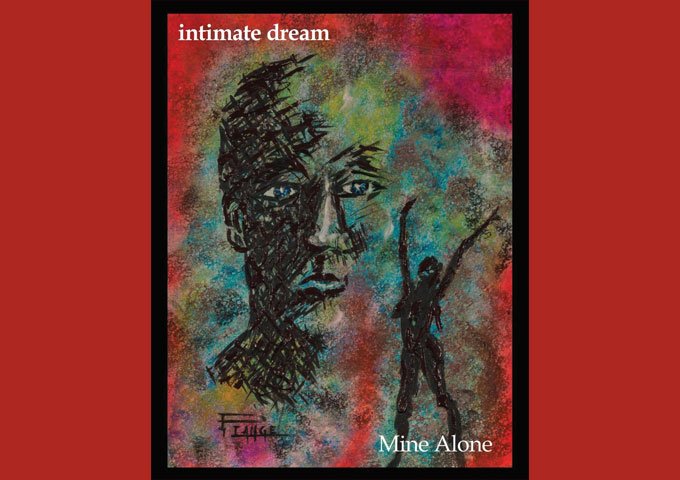
intimate dream brings ten richly crafted songs together on Mine Alone, an album where timeless melodies meet contemporary production. Hugh Faulds and Larry Williams explore romance, nostalgia, loss, desire, and everyday reality through a diverse musical palette. Blues, funk, rock, pop, and punk influences move naturally across the record without compromising its cohesive identity. From the emotional resonance of “We Never Said Goodbye” to the groove-driven intensity of “Dark Clouds,” every track adds another dimension to the experience. Mine Alone ultimately demonstrates how enduring songwriting principles can remain powerful without being confined to the past.
intimate dream understands something fundamental about great songwriting: familiarity does not have to mean predictability. A melody can carry echoes of another decade and still feel immediate. A guitar can sound unmistakably rooted in classic pop-rock while remaining completely relevant to the present. A chorus can be built around an enduring musical instinct rather than a passing trend and still command attention. That understanding runs throughout Mine Alone, the latest album from intimate dream, the musical project built around singer, songwriter, and guitarist Hugh Faulds.
Across its ten tracks, Mine Alone creates a fascinating conversation between past and present. The album draws from the melodic craftsmanship, guitar-driven confidence, groove, and expansive pop-rock sensibilities associated with the 1970s, but it never becomes an exercise in nostalgia for nostalgia’s sake. Hugh Faulds takes those ingredients and places them inside a contemporary production environment, allowing them to breathe, evolve, and acquire new emotional meaning.
That distinction is crucial. Mine Alone does not feel like retro music attempting to recreate a vanished moment. Its classic influences are audible, but they function as musical vocabulary rather than costume. Strong melodies remain at the center. Guitar parts have weight and personality. Rhythms provide movement without overwhelming the songs. Choruses are designed to stay with the listener. These are timeless songwriting principles, and intimate dream uses them with considerable confidence.
The album’s title track, “Mine Alone,” establishes that identity immediately. Captivating guitar lines accompany Hugh’s intense yet warm vocal performance, creating an atmosphere that feels simultaneously intimate and expansive. The song possesses a reflective quality that invites closer attention to its lyrical narrative, while the arrangement allows the guitar work and vocals to reinforce rather than compete with each other. It is a compelling introduction to the emotional world of the album, presenting intimate dream as a project interested in both atmosphere and substance.
From there, “Dark Clouds” delivers one of the record’s most dramatic changes in temperature. The track enters with outstanding guitar work before settling into a groove shaped by bluesy, funky bass lines and solid drumming. Its rhythmic character gives the composition an infectious physicality, while the exceptional female vocal performance adds another dimension of energy and intensity. Blues, funk, and rock meet naturally here, demonstrating just how comfortably intimate dream can move between stylistic territories without sacrificing its central identity.
That adventurous spirit continues with “(Now I Wanna Be A) Space Girl,” which introduces harder-edged textures and old-school punk-rock energy into the album’s palette. The track has an immediacy that distinguishes it from the more reflective material, with Hugh’s vibrant vocals riding a lively instrumental foundation. Rather than simply repeating the sonic formula established earlier, the song expands the record’s range and reinforces the sense that Mine Alone is intended as a journey through contrasting moods and musical ideas.
“Won’t Forget” turns inward again. Beautiful slow guitar strums and a captivating introductory solo immediately create a more spacious environment for Hugh’s voice. As the song develops, its chilled rock-pop character allows the melody to take center stage, while vocal harmonies enrich the chorus and heighten its emotional warmth. The track succeeds precisely because it does not need to overstate its feelings. Its appeal comes from the quality of the writing, the restraint of the arrangement, and the sense that every musical detail has a purpose.
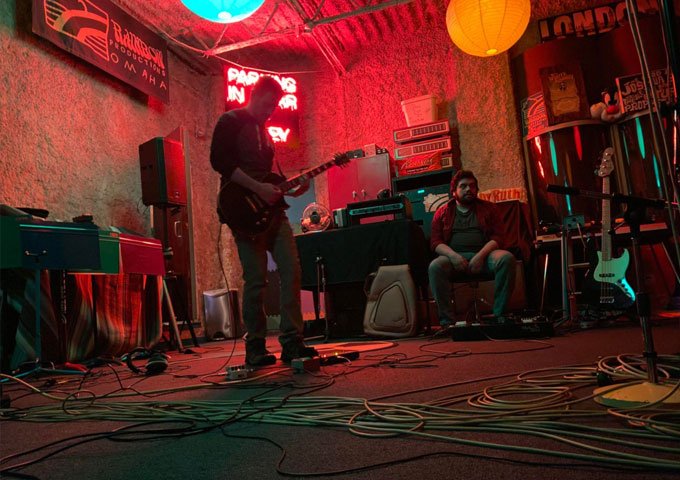
One of the album’s most emotionally affecting performances arrives with “We Never Said Goodbye.” Supported by a compelling music video featuring live-performance imagery, the song combines considerable energy with an unmistakable sense of loss. Young drummer Ky Ngo supplies a strong rhythmic foundation, giving the performance momentum while allowing the chemistry between the musicians to remain clearly audible.
The recurring imagery of stars, sky, light, and a world transformed by absence gives “We Never Said Goodbye” a particularly poignant atmosphere. Its central refrain becomes the emotional anchor of the composition, transforming what might initially sound like an energetic rock performance into something much more vulnerable. That contrast is one of the song’s greatest strengths. It demonstrates how a powerful band performance can coexist with deeply personal subject matter without either element diminishing the other.
“In Your Head” takes the album into another territory altogether. Its direct lyrical perspective gives the track an immediate, confrontational quality, particularly through its insistence that reality cannot simply be treated like a movie script. The song’s central observation that “This ain’t the movies this is real life” cuts through romanticized expectations and places the listener firmly in the uncertainty of actual experience. It is a striking moment because intimate dream does not attempt to make reality prettier than it is. Instead, the song uses that tension as fuel.
The remaining material broadens the album’s emotional scope. “Wonderful Thing,” “Find Love,” “Slow Down,” and “Raise Your Hand” each introduce another perspective, mood, or narrative dimension while maintaining the musical standards established earlier. Rather than functioning as disconnected pieces, they contribute to a larger portrait of an artist interested in relationships, personal experience, observation, movement, and the complicated emotional terrain that exists between them.
The songwriting partnership is an important part of that portrait. Tracks 1 and 2, 4 through 8, and 10 were written by Hugh Faulds, while tracks 3 and 9 were written by Larry Williams. That division gives the album an additional layer of creative variety, while the performances and production provide the consistency necessary to make the project feel unified.
The production team plays a significant role in achieving that cohesion. Todd Fitzgerald and Brian Johnson handled engineering, production, and mastering at Winterland Recording Studios and The Terrarium Recording Studios. Their experience, including credits associated with multiple Grammy Award-winning artists such as Alanis Morissette, Christina Aguilera, Elvis Costello, Slipknot, Soul Asylum, and Prince, brings substantial technical expertise to a project that demands flexibility from track to track.
That expertise is particularly valuable because Mine Alone refuses to sit comfortably inside one genre. Rock, blues, funk, pop, punk, and more introspective songwriting coexist throughout the album, yet the record never loses sight of melody. That is perhaps its defining characteristic. Whatever direction a particular track takes, the songwriting remains the gravitational center.
Hugh Faulds emerges as an artist with a strong instinct for memorable musical construction and an evident enthusiasm for exploring different sonic environments. His guitar work provides much of the album’s muscle, while his vocals give the songs their human center. Around him, the musicians contribute to a dynamic sound that can move from restrained and reflective to explosive and groove-heavy without feeling forced.
Mine Alone succeeds because its relationship with the past is creative rather than imitative. intimate dream recognizes the lasting power of great melodies, expressive guitars, compelling grooves, and choruses built to endure, then places those elements inside a modern recording aesthetic. The result is neither a museum piece nor a nostalgia exercise. It is a living album made by musicians who understand why these musical ingredients continue to resonate.
From the introspective atmosphere of “Mine Alone” and the blues-funk electricity of “Dark Clouds” to the stylistic charge of “(Now I Wanna Be A) Space Girl,” the warmth of “Won’t Forget,” the emotional weight of “We Never Said Goodbye,” and the uncompromising realism of “In Your Head,” the album continually finds new ways to hold the listener’s attention.
Mine Alone feels like a portrait of an artist looking outward and inward at the same time, processing relationships, memories, loss, desire, and everyday reality through songs that value craftsmanship as much as expression. intimate dream have created a record with genuine musical personality, strong performances, thoughtful arrangements, and a production approach capable of uniting its stylistic contrasts. It is an album that remembers where great pop-rock songwriting came from without allowing the past to dictate where it can go next. For listeners drawn to memorable melodies, expressive guitar work, emotionally resonant storytelling, and musicianship with character, Mine Alone offers a richly rewarding experience that reveals more of itself with every listen.

















+ There are no comments
Add yours